Plumbing · the USA
Every visit starts with a camera inspection so the crew selects the right nozzle and pressure for the pipe and the material inside it. The same inspection is repeated after cleaning to confirm the line is clear before the equipment is removed.
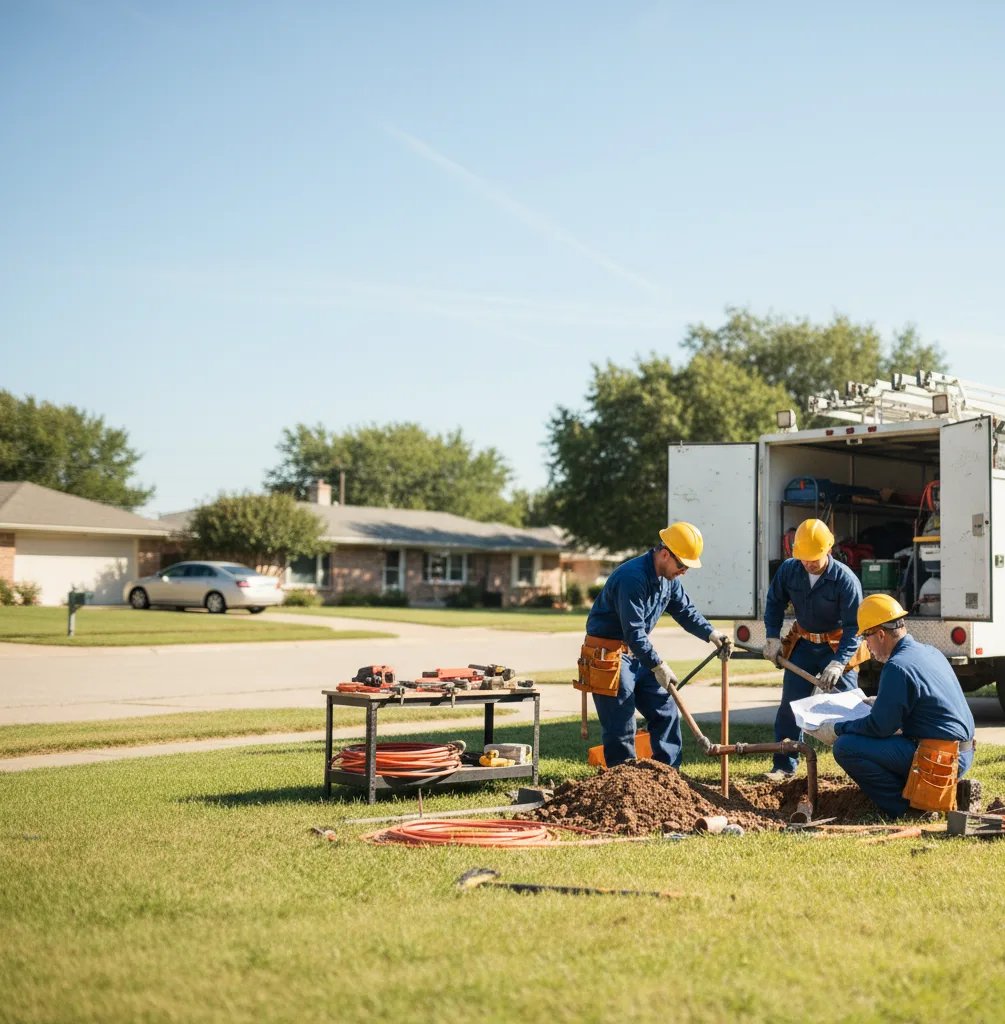
Hydrojetting uses a high-pressure stream of water fed through a flexible hose and specialized nozzle. The nozzle is selected according to the diameter of the pipe and the material that has collected on the walls. Grease, soap residue, and mineral scale each respond to different spray angles and flow rates during drain cleaning. The operator feeds the hose from the downstream cleanout so loosened material moves toward the exit rather than farther into the building. After the main run is cleared, the nozzle is often switched to a spinning or penetrating head to strip remaining film from the pipe walls. The process leaves the interior surface smoother, which slows the rate at which new deposits form.
Recurring slow drains on multiple fixtures on the same branch line often point to a partial restriction rather than a single clog. Gurgling sounds at one fixture when another is used can mean air is trapped behind a narrowing in the pipe. A camera inspection performed first reveals whether the restriction is grease, roots, or hardened scale. Homeowners can sometimes confirm the location by noting which fixtures are affected and whether the problem appeared suddenly or developed over weeks. Once the camera footage is reviewed, the crew selects the nozzle and pressure setting that will remove the material without damaging the pipe during emergency plumbing calls.
Water Heater Repair & Plumber across the USA. Call (833) 659-3362.
Call (833) 659-3362